As a pediatric speech-language pathologist, one of the most common questions I hear from parents is: "Is my child's speech normal for their age?"
It's a great question — and the answer depends a lot on which sounds your child is using and how well family and strangers can understand them. This guide breaks it all down.
What is "intelligibility"?
Intelligibility refers to how well others can understand your child's speech. Here's what's typical:
Age 2: Familiar adults (parents, siblings) understand about 50% of what your child says
Age 3: Strangers understand about 75%
Age 4: Strangers understand about 90%
Age 5+: Most people understand your child nearly 100% of the time
Which sounds develop when?
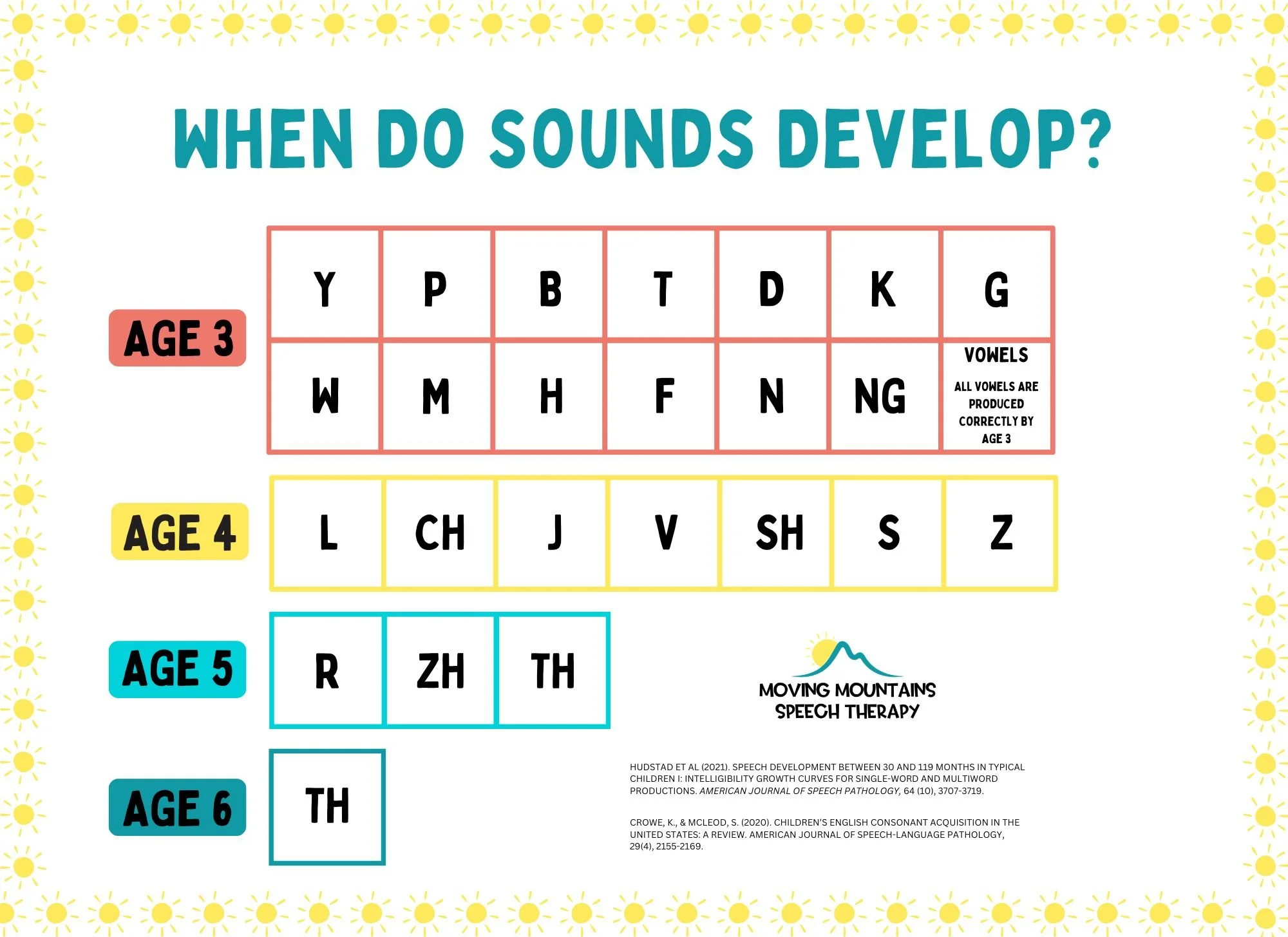
A few important notes:
These ranges represent typical development — not every child follows the exact same timeline, and some variation is normal. Boys also tend to develop speech sounds slightly later than girls on average.
The sounds listed are mastery ages — meaning when most children produce the sound correctly in all positions (beginning, middle, and end of words) most of the time.
When should I be concerned?
Consider reaching out to a speech-language pathologist if:
Your 2-year-old is hard to understand (even for you) and isn’t beginning to combine 2 words together
Your 3-year-old isn't using two-word combinations
Your 4-year-old is still leaving off the ends of words
Strangers frequently can't understand your child past age 4
Your child is frustrated when people don't understand them
You have a gut feeling something is off
Trust your instincts. It’s always better to schedule an evaluation and get either peace of mind or help. Early intervention makes a real difference — the earlier a child receives support, the better the outcomes tend to be.
What about the "r" sound?
Parents ask about this one constantly! The "r" sound is one of the last to develop and isn't expected until age 5-6. So if your 4-year old says "wabbit" instead of "rabbit," that's completely normal.
Questions about your child's speech?
Moving Mountains Speech Therapy offers free 15-minute phone consultations to help you determine if your child could potentially benefit from speech therapy.